2025 Celebrating the Festival of Light, Diwālī: “It is through your behavior, through your pure lights, through your fragrance, people are going to know God Almighty”

"Today we have assembled here to celebrate the Diwālī, the Dīpawali.
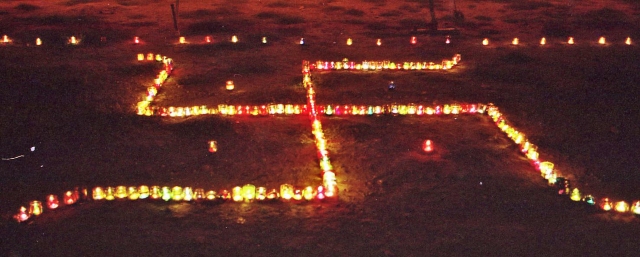
Actually, only after Sahaja Yoga started, the real Diwālī is taking shape. We had many beautiful lamps, and we had lot of oil to burn, but there was no spark, to enlighten the dīpas. And the wick, as you call it -- is called as bātī in Hindi language -- is like your Kuṇḍalinī, so the Kuṇḍalinī had to meet the spark. The beautiful lamps were all a waste, purposeless, pointless. And this is the great blessings in modern times, that so many lights are enlightened and we are having a dīpāwali of human hearts. When you become the light, you don't worry about the lamp, how it looks, how it is to be made, it's all done. You just have to worry about the flame, about the oil, because it's the oil that burns and gives light.
......
Actually after getting Realization, you just start spontaneously giving because you are the light. But respect your light and the light of others. The darkness is too much and we need so many lights to remove this darkness. These lights are to be maintained, to be looked after, to be loved.
......
It is through your behavior, through your pure lights, through your fragrance, people are going to know God Almighty."
1985-1117 Diwālī Pūjā (6th Day after Diwālī Day), Bagni di Tivoli (24 kms E of Rome), Lazio, Italy
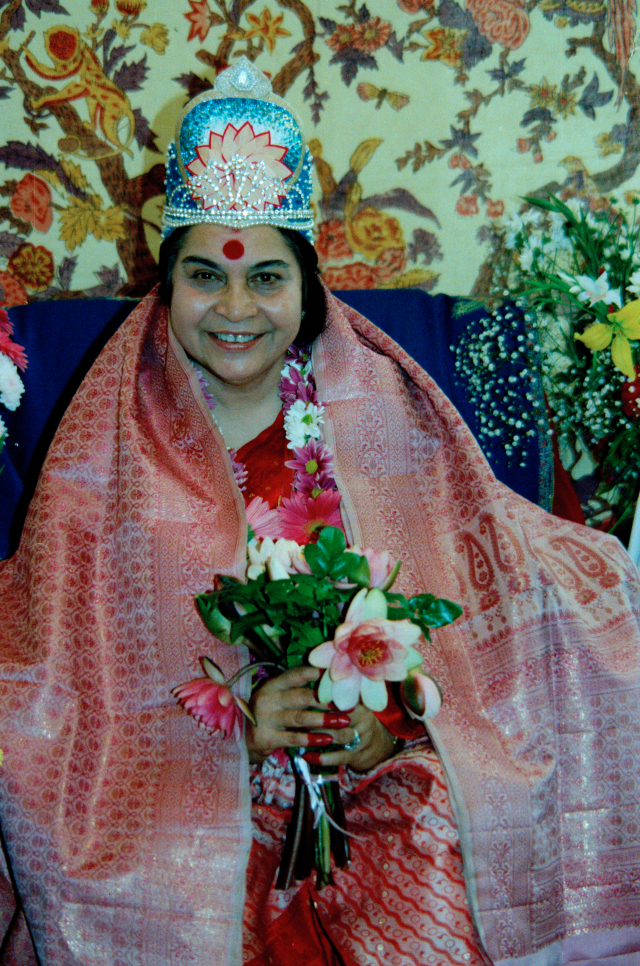
"Diwālī means the, the rows of lights. So, you are going to make this beautiful mansion of God full of Diwālī light. You have entered into the Kingdom of God and you have to enlighten it. So you are the decoration of God on one side, you are the glory of God and also, on the other side you are the guide, guidelines -- you are like the torches, ......"
1981-1027 Talk to Sahaja Yogis (Diwālī Day), Lakṣhmī Principle and Relationship between Men and Women, Āśhram, former Hotel, Bramham Gardens, Earl's Court, Kensington, London, UK
Pavan Utsav ayya re
video
"The first day of Diwālī is called as Dhanatrayodaśhī: is the thirteenth day of the Moon. Because that day is the first day when Lakṣhmī, the first ... was born on the thirteenth day. That means She was born as a Gṛuhalakṣhmī, as a housewife.
Now there are eight Lakṣhmīs, which she will read it out. And I will tell you later on what is the meaning of all [them]. So one of them is Gṛuhalakṣhmī.
So the first is the form of a Gṛuhalakṣhmī. She is born as a Gṛuhalakṣhmī, to begin with. That means the awareness, of human beings also, started really getting into evolutionary process when they started their family life. When they were vagabonds, moving about, then the awareness was just like animals. Though they had become human beings, but they were like animals. Then when they established their families, then the Gṛuhalakṣhmī started working and that's how the first Advent of Gṛuhalakṣhmī was felt.
So She is the first Lakṣhmī who was born, and that's why on that thirteenth day is the day of the Gṛuhalakṣhmī, of the housewife. And so, one has to go in the market and buy some utensils or something that she uses for cooking in the house. In India on the thirteenth day everyone goes and buys a pot or, say, we can say, what you call, a cooking utensil or something. Or they may buy a sāṛī or something or gold or something for the gṛuhalakṣhmī. That is the day of the housewife.
So, to reach the Lakṣhmī one has to understand that motherhood is very important. The motherhood as a gṛuhalakṣhmī is important."
1980-1109 Diwālī Pūjā (Bhāūbīj Day), The Mahālakṣhmī Power, Temple of All Faiths (now demolished, 11c Pond St), Belsize Park, Hampstead, London, UK]
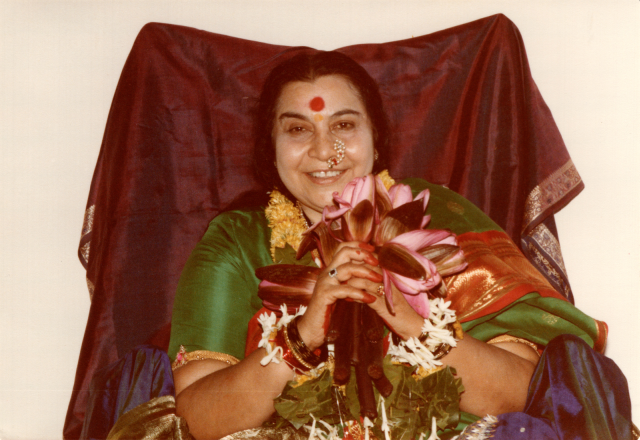
"The state of a Gṛuhalakṣhmī should be exactly like a lotus. The lotus is the abode of Gṛuhalakṣhmī. She should be like a lotus that blooms above the water, spreads its fragrance and is the complete support of Śhrī Lakṣhmī."
1986-1101 Diwālī Pūjā (Hindi + Marathi) (Diwālī Day), Puṣhpa Maṅgal Karyalaya, Mote Mangal Karyalay Road, Sheth Narayan Das Dugad Chowk, Bibwewadi, Pune, Maharashtra, India
"The first day is the thirteenth day where it is the gṛuhalakṣhmī's day. Is a ṛughalakṣhmī's [gṛuhalakṣhmī's] day, that is the day when the gṛuhalakṣhmī is worshiped."
1983-1106 Diwālī Pūjā (Bhāūbīj Day), Become the Ideals (Unless and Until You Become Your Ideals You Are Not a Sahaja Yogi), Temple of All Faiths (now demolished, 11c Pond St), Belsize Park, Hampstead, London, UK
Shrī Mātājī: Aham Sākshāt Gṛuhalakṣhmī, Aham Sākshāt Gṛuhalakṣhmī, Aham Sākshāt Gṛuhalakṣhmī, Aham Sākshāt Gṛuhalakṣhmī, Aham Sākshāt Gṛuhalakṣhmī – ah!
1980-0313 Public Program, The Meaning of Sahaja Yoga, Caxton Hall, 10 Caxton Street, Westminster, London, UK
"Diwālī Pūjā is a very small Pūjā but extremely significant. Firstly in Diwālī, the first day they buy something for the family. You can – maybe some cooking utensil could be, an ornament for the wife or something like that. Because that is the day of housewife. And that day is to be celebrated as the housewife’s, I should say, homage to her. As a result you know in India even now housewives are very much respected. Actually they are respected all over."
1998-1025 Diwālī Pūjā (6th day after Diwālī Day), Expression of Love, Pal Sports Complex, Novi Ligure, Alessandria, Italy
"So inside every woman, there is a motherhood, there’s great capacities, sacrifice, everything is there. With that, they also should know they’re left-sided. And our joy about which we talk within our heart has to manifest outside.
People should see that we are joyous, that we are happy people, that we are not like others who start crying for small things.
So if you are a Sahaja Yoginī, then at the time of crisis you should become thoughtless. That’s one of the signs. I have seen with Myself, if there is any crisis in the family, I just become thoughtless. That means what? That God just takes you in your problems. He puts his hand, He puts His protection and He takes you out of it and makes you absolutely thoughtless. And in that thoughtless awareness, you discover what is right, what is wrong.
So even in crisis, this thoughtless awareness is all the time extremely alert. It becomes much more alert than normal. That’s the sign of a Sahaja Yogi and sign of Sahaja Yoginī."
1991-1110 Diwālī Pūjā (5th day after Diwālī Day), Joy and Happiness, Tent, Cabella Ligure, Alessandria, Italy
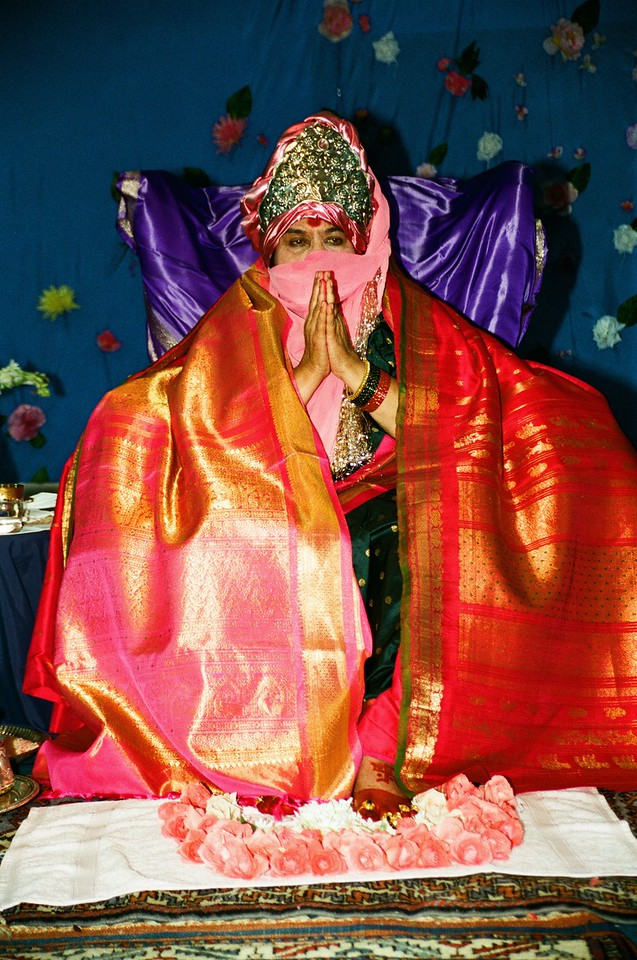
"The Deity of Gṛuhalakṣhmī is Fāṭimah Bi, the daughter of Muhammad Sāhab."
1983-0131 Public Program, Day 2, The Nābhī Chakra, N.D.M.C. Park, Hanumān Road, New Delhi, India
"Gṛuhalakṣhmī is the woman who should know that she has the great responsibility of creating a very great society of Sahaja Yoga."
1991-0428 Śhrī Haṃsa Chakra Pūjā, The Source of Discretion, Queens, New York City, NY, U.S.A.
Bolo Śhrī Gṛuhalakṣhmī sākṣhāt Śhrī Ādi Śhakti Mātājī Śhrī Nirmalā Devī kī!
"...... there are Nine Lakṣhmīs which are described, navadhā, nine, which get completely manifested in a human being. One of them as we call as Gṛuhalakṣhmī. Gṛuhalakṣhmī means the family. The wife becomes a very wonderful person.
She doesn’t object to things, she doesn’t react, but she’s very sensible and she builds up all her children in a beautiful manner. On the contrary, where she is not a Gṛuhalakṣhmī, she takes pride in working out something like men. [This] means – to her, her job is important, her bank balance is important. But the real bank balance of a Gṛuhalakṣhmī is her family and her children. If she doesn’t have that, she will be just thinking that she is very great, she can compete with this man or that man.
Women don’t understand that their greatest capacity is to love. How is it that Lakṣhmī is a woman and all the Goddesses are women? And what is the quality of these Goddesses is to bestow blessings on people of their own nature, of their own qualities."
2000-1029 Diwālī Pūjā, Lake Piru Recreational Area Campground, CA, U.S.A.
"Because as I have said that that men and women are like two wheels of a chariot, one on the left, one on the right. The left cannot go to the right and right cannot go to the left. So we have to understand that our role is much more important than of the other. Like the men have an important role, as well as the women have even more important role. To be a mother itself is a very big thing. Why God has given you the motherhood? Because God thinks you are like the Mother Earth, that you look after, nourish the child, nourish the family, do all these things."
1990-0314 Śhrī Mahālakṣhmī Pūjā, Auckland, New Zealand
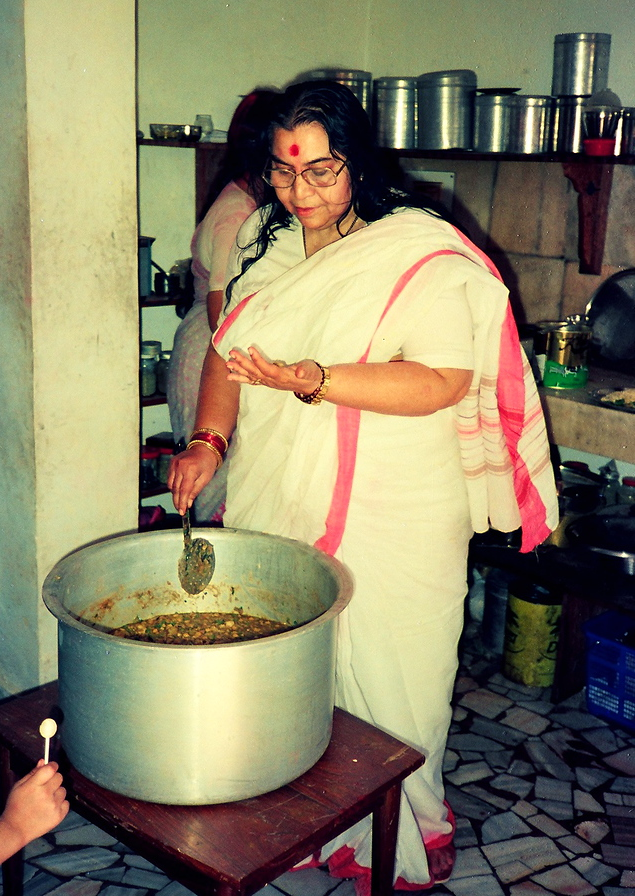
"...... Mahālakṣhmī is also Annapūrṇā. And She, She, She supplies food, you see, to people. You can say Mahālakṣhmī is the grandest Gṛuhalakṣhmī. "
1984-0908 Śhrī Mary Mahālakṣhmī Pūjā, Münich, Germany
"The significance of Diwālī is spread out in about five days.
......
And they are all together somehow, these five days are all put together. So they have different aspects, but in every aspect there’s one common point is that the Goddess plays the main role."
1992-1025 Diwālī Pūjā, Sala Olimpia (Olympia Sports Hall), Timişoara, Romania
Hasat Ali
video
Kanakadhara Stotram
video
Aṣhṭa Lakṣhmī Storam
video
Wishing you all a very Happy Dhanteras and Happy Diwālī!
Jai Śhrī Mātājī!
On behalf of the festivity team!